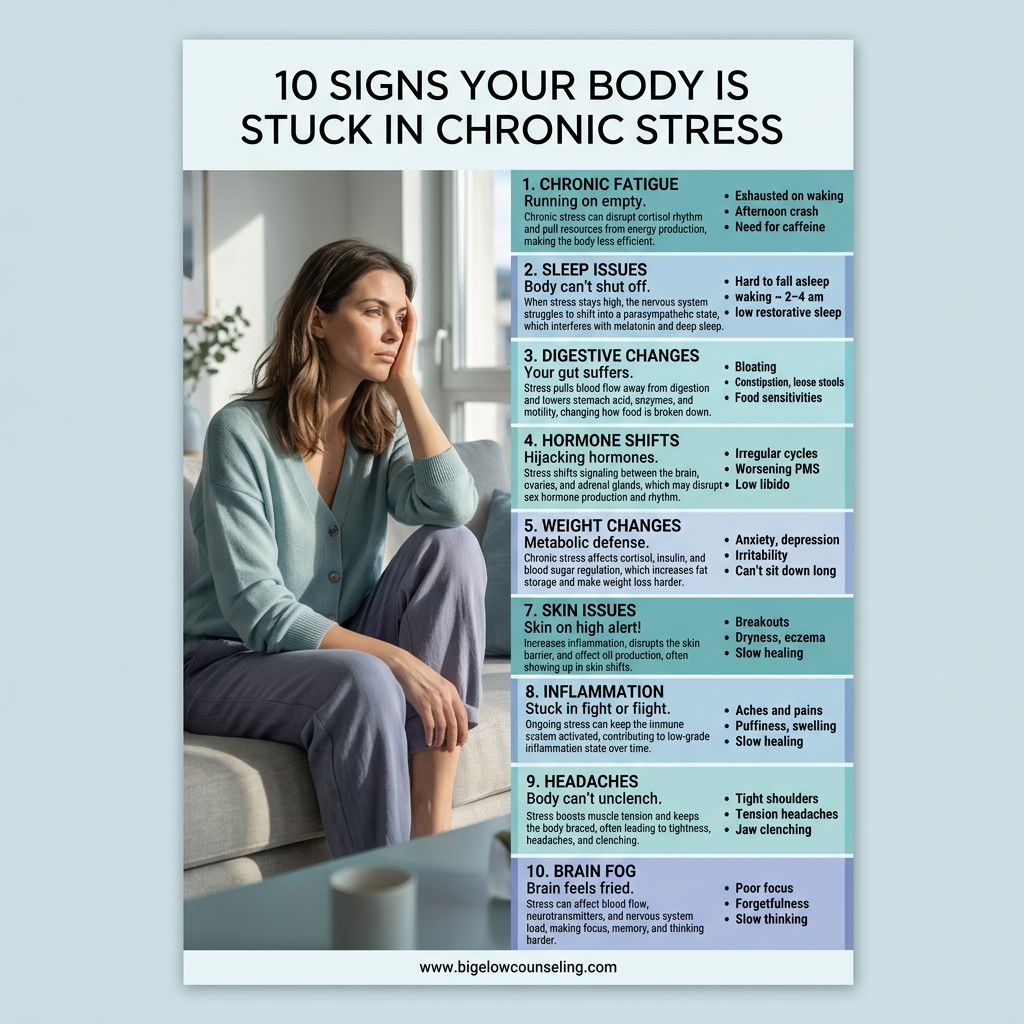
Stress can feel like part of everyday life, but when does it cross the line into burnout? Knowing how to spot the signs of burnout is key to protecting your well-being before exhaustion takes over. This post breaks down how to know stress vs burnout, offers a simple checklist to recognize warning signs, and shares first steps toward relief. For personalized support, Bigelow Counseling in Palm Beach and online stands ready to help with counseling, EMDR, and coaching tailored to your needs. For more information on burnout signs and recovery, check out this resource.
Understanding Stress and Burnout
Stress and burnout, though related, affect your body and mind in distinct ways. Recognizing these differences can help you take the proper steps to manage them effectively.
Everyday Stress vs. True Burnout
Stress is a common experience, often resulting from daily demands. It can motivate you to meet goals, but when it becomes chronic, it turns harmful. Burnout, on the other hand, is a state of emotional, physical, and mental exhaustion caused by prolonged, excessive stress. Unlike regular stress, burnout leaves you feeling helpless, hopeless, and disillusioned. Where stress is about too much, burnout is about not enough — not enough motivation, energy, or care left.
Chronic Stress Warning Signs
Chronic stress wears you down over time. It’s often marked by physical symptoms like headaches, upset stomach, and sleep problems. You might feel anxious, irritable, or overwhelmed. If left unchecked, chronic stress can lead to burnout. Pay attention to persistent signs, such as loss of interest in activities, feeling trapped, and increased cynicism. These may indicate that stress has gone beyond its limits and is affecting your overall well-being.
Burnout Symptoms and Stages
Burnout doesn’t happen overnight. It creeps in through stages, starting with mild symptoms like exhaustion and progressing to more severe states of detachment and feeling ineffective. You may notice a drop in performance, increased forgetfulness, or an inability to concentrate. As burnout deepens, emotional numbness and a sense of failure can take over. Recognizing these stages early can prevent further decline and lead to recovery. For a comprehensive look into these symptoms, refer to WebMD’s guide.
Practical Self-Checks and Relief Steps
Understanding the signs of burnout is just the first step. Next, you need practical tools to assess your situation and begin recovery.
Stress vs. Burnout Checklist
Use a checklist to evaluate whether you’re dealing with stress or have crossed into burnout. Here are some questions to consider:
-
Do you feel constantly overwhelmed or irritable?
-
Are you losing interest in activities you once enjoyed?
-
Is your sleep disrupted, or do you feel fatigued despite resting?
-
Are you experiencing frequent headaches or muscle pain?
-
Have you become more cynical or detached from your work or relationships?
If you answered “yes” to several of these questions, you might be experiencing burnout rather than simple stress.
First Steps for Burnout Recovery
Recovering from burnout starts with acknowledging its presence. Prioritize rest and self-care, setting boundaries to protect your time and energy. Simplify your commitments, focus on activities that rejuvenate you, and reach out for support from friends or professionals. Remember, recovery is a gradual process, and small, consistent steps can lead to significant improvements.
Creating Your Burnout Recovery Plan
Crafting a personalized recovery plan can guide you back to well-being. Start by identifying the sources of your stress and consider how they can be managed or mitigated. Set achievable goals, such as taking regular breaks or practicing mindfulness. Incorporating healthy habits like exercise and balanced nutrition is crucial. A structured plan can give you a sense of control and purpose as you work toward recovery.
Seeking Professional Support
Sometimes, professional guidance is essential to overcome burnout. Expert help can offer personalized strategies and interventions tailored to your needs.
EMDR Therapy in Palm Beach
For those dealing with trauma-related burnout, EMDR therapy offers effective relief. This therapy helps process traumatic memories and reduce their impact on your current emotional state. If you’re in Palm Beach, EMDR therapy can be a powerful tool in your recovery journey.
LGBTQ Affirming Therapy Options
If you identify as LGBTQ+, finding a therapist who understands your unique experiences is vital. LGBTQ affirming therapy provides a safe space to explore stressors specific to your identity. In Palm Beach, inclusive therapy options are available to support you through challenges and help build resilience.
Executive Coaching for Burnout Relief
Professionals experiencing workplace burnout may benefit from executive coaching. This type of support focuses on career-related stress and can guide you in setting boundaries, improving work-life balance, and achieving professional goals. In Palm Beach, coaching services are tailored to help you find fulfillment and prevent future burnout.
Frequently Asked Questions
What are the main signs of burnout?
Burnout shows up as emotional exhaustion, cynicism, and reduced performance. You may feel detached, lack motivation, and experience physical symptoms like fatigue and headaches.
How is burnout different from stress?
Stress involves feeling pressured by demands, often temporarily. Burnout occurs when stress becomes chronic, leading to emotional, mental, and physical exhaustion.
Can burnout be prevented?
Yes, by managing stress through healthy habits, setting boundaries, and seeking support. Recognizing early signs and taking proactive steps can prevent burnout.
What therapies help with burnout?
Therapies like EMDR, cognitive-behavioral therapy, and mindfulness-based interventions can effectively manage and reduce burnout symptoms.
Is executive coaching useful for workplace burnout?
Yes, executive coaching is beneficial for addressing career-related stressors, improving work-life balance, and setting professional goals to prevent burnout.