
Trauma Therapy

You Already Told the Story Once
It did not help.
In an office, you walked someone through the worst of it, in order, out loud, because that was what the process seemed to require.
You left shaking. You held it together in the parking lot.
Somewhere after that, you drew a conclusion about yourself: that other people recover from this and you do not.
When You Cannot Name the Day
Some people can name the day. For you, it is closer to a climate than an event.
A house where the temperature could change without warning. Someone you loved who was also the danger.
A childhood spent learning to read a room before you could read a book.
There is no single moment to point at, which is part of why you have quietly wondered whether any of it counts.
Your Diagnosis Responds to Trauma Treatment
If you have been given a diagnosis of borderline personality disorder, you were probably handed the impression that it is a character flaw and a life sentence.
It is what happens when a developing nervous system spends years somewhere it can neither predict nor leave. It is a trauma-based condition, and it responds to trauma treatment.
Where You Are and What Comes Next
We work from a three-stage model for trauma recovery. It tells you where you are and what comes next, so the work has visible edges.
Stage One: Safety. Nothing gets processed until there is somewhere steady to stand. This means nervous system regulation, sleep and routine, distress tolerance, and learning to catch a trigger before it takes the whole day.
For complex trauma this stage takes longer. Moving to processing before the ground is stable is the single most common reason trauma therapy goes badly, and it is usually why someone arrives here having already tried.

Why You Never Have to Narrate It Out Loud
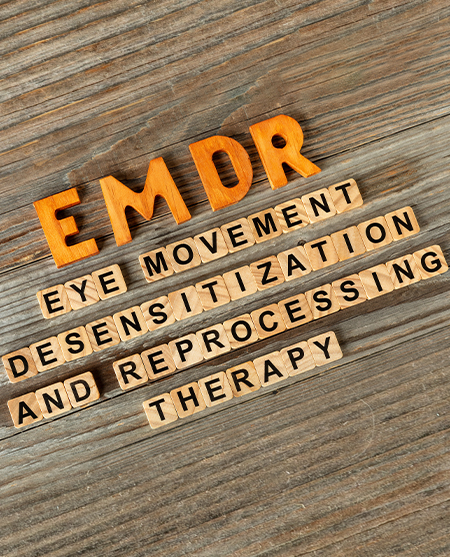
Stage Two: Retelling Your Story. This is the stage people brace for. It is exactly why we use EMDR.
In EMDR, you identify a memory to work on and the belief it left you holding about yourself. The processing happens internally, with bilateral stimulation, while you track whatever surfaces.
You report briefly between sets: a flash, a sensation, a thought that arrived. At no point are you required to recount the event in detail out loud.
Memory encoded during overwhelm is stored differently from ordinary memory, which is why it keeps presenting itself as though it were current. EMDR reprocesses it so that it files as something that happened rather than something happening.
Test the Belief You Hold
Stage Three: Reconnecting. Trust rebuilds by evidence, through small deliberate experiments in your actual life.
Saying the difficult thing and finding the relationship holds. Setting a limit and surviving the discomfort of having set it.
Each one is data against a belief that has never once been tested.
When Your Alarm Finally Stops
What people describe afterward is that remembering stopped costing them the rest of the afternoon.
Sleeping through the night. Hearing a raised voice and staying in the room.
The memories stay.
They stop getting a vote in how today goes.
Begin With 15 Minutes
1. A 15-minute conversation, free of charge. Nothing is processed in that call.
2. A first full session focused on where you are now and how you got here.
3. Processing, at a pace you set. Any session can stop.
Schedule Your Free Consultation
Or call (561) 440-4541.